
By Glend MaatitaUpdated
What is Cloud Computing?
Cloud computing is the delivery of computing services, from servers and storage to databases and software, over the internet on a pay-as-you-go basis. This guide explains what cloud computing is, its history, its five defining characteristics, and how it helps companies deploy applications faster and more reliably.
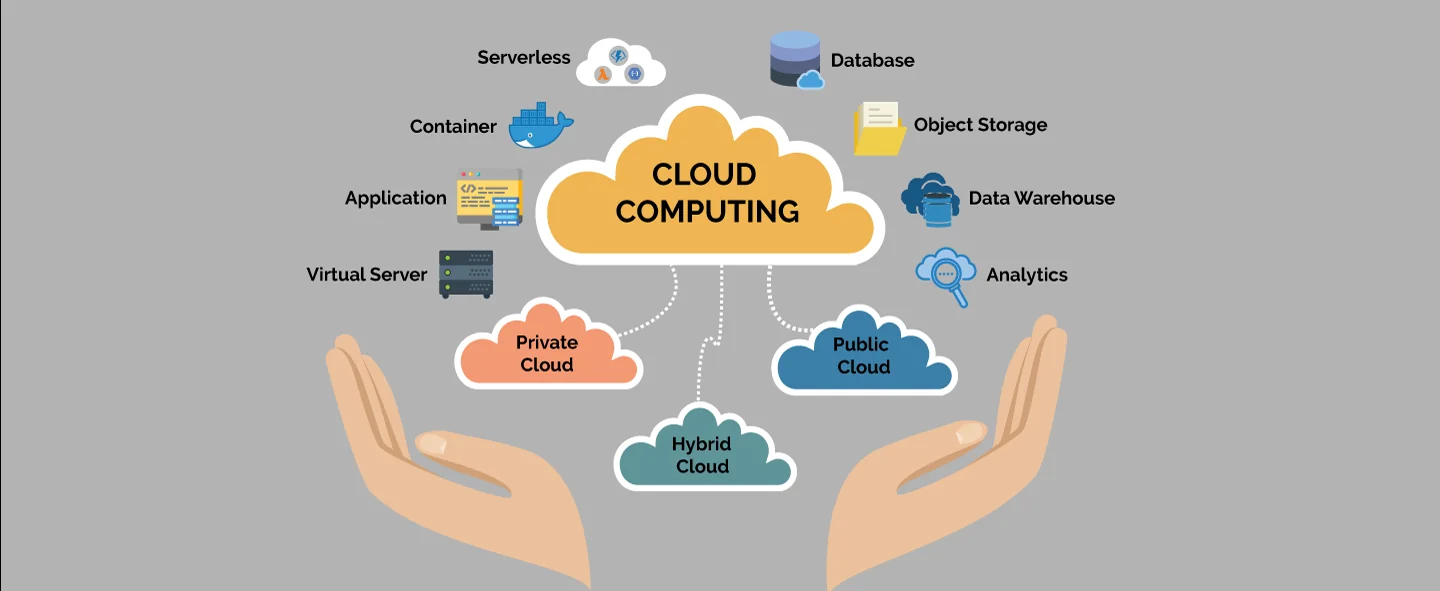
In today's digital age, cloud computing powers almost everything we use, from social media to online banking, yet many people still struggle to say what it actually is. At its simplest, cloud computing lets you rent computing resources over the internet instead of buying and running your own.
Below, we demystify cloud computing by explaining what it is, where it came from, the characteristics that define it, and how it helps companies build and ship applications faster and more reliably.
What is cloud computing?
Cloud computing is the delivery of computing services, including servers, storage, databases, networking, software, analytics, and intelligence, over the internet, often just called "the cloud." You access and use these resources on a pay-as-you-go basis, without having to buy, run, or maintain the underlying infrastructure yourself.
A useful way to picture it is a buffet: you pick and choose the services you need at any moment, rather than buying and maintaining the entire spread. When you need more, you take more; when you need less, you stop paying for it.
A short history of cloud computing
The idea behind cloud computing goes back to the 1960s, when computer scientist J.C.R. Licklider envisioned a global network connecting people to data and applications from anywhere. It only took its modern shape in the early 2000s, when Amazon Web Services launched in 2006 and became the first widely accessible cloud platform. Since then, major players like Microsoft Azure, Google Cloud, and IBM Cloud have joined the market, driving steady innovation and competition.
The five characteristics of cloud computing
A system is generally considered true cloud computing when it shows five essential characteristics.
On-demand self-service
Users can provision and configure resources as they need them, without waiting for human intervention from the provider. A startup, for example, can scale up server capacity for a product launch in minutes rather than buying new hardware.
Broad network access
Cloud services are available over the internet and reachable from any device with a connection. A remote design team, for instance, can collaborate on the same cloud-based tools regardless of where each person is.
Resource pooling
Providers serve many customers from a shared pool of computing resources, a bit like carpooling for compute. This allows efficient allocation and real cost savings, which is how services like Netflix stream to millions of users at once.
Rapid elasticity
Resources can be scaled up or down quickly to match demand, which is invaluable for businesses with fluctuating usage, such as an e-commerce store during the holiday shopping season.
Measured service
You pay only for the resources you actually consume, much like a utility bill. That lets businesses optimize spending and avoid paying for capacity they are not using.
Cloud service models: IaaS, PaaS, and SaaS
Cloud services are usually grouped into three models. Infrastructure as a Service (IaaS) provides virtualized computing resources over the internet, letting companies rent components like virtual machines, storage, and networking instead of buying and maintaining physical hardware. Dropbox, for example, uses IaaS to store and manage huge amounts of user data and scale as needed.
Platform as a Service (PaaS) goes a step further, offering a ready platform for developers to build, test, and deploy applications without managing the underlying infrastructure, which speeds development and shortens time to market. Heroku is a well-known example. Software as a Service (SaaS) sits at the top, delivering finished applications over the internet, such as email or CRM tools, so users simply log in and use them.
How the cloud helps you deploy faster and more reliably
Beyond renting infrastructure, the cloud brings reliability features that are hard to match on-premises. High availability uses redundant components, load balancing, and automatic failover across multiple availability zones to minimize downtime, so an application keeps running even when individual hardware fails. High scalability lets you increase or decrease resources on demand, which is essential for handling traffic surges like a holiday sale without degrading performance.
Multi-region deployment takes this further by running an application across several geographic regions, which improves reliability and reduces latency for users. If one region has a problem, the application keeps serving from another with minimal disruption, which is how global services like Spotify stay available worldwide even during a regional outage.
How 8grams works with the cloud
At 8grams, we help businesses design, migrate to, and run reliable cloud infrastructure across providers like AWS and Google Cloud, as well as on-premises where it fits better. We build environments that take full advantage of the cloud's elasticity, availability, and pay-as-you-go model, so your applications ship faster and stay up.
Key takeaways
- Cloud computing delivers computing services over the internet on a pay-as-you-go basis, with no infrastructure to manage.
- It is defined by five characteristics: on-demand self-service, broad network access, resource pooling, rapid elasticity, and measured service.
- Services are grouped into IaaS, PaaS, and SaaS, from renting raw infrastructure to using finished applications.
- Features like high availability, scalability, and multi-region deployment let companies deploy faster and more reliably than on-premises.
References & further reading
Common questions.
What is cloud computing?
Cloud computing is the delivery of computing services, such as servers, storage, databases, networking, and software, over the internet on a pay-as-you-go basis. You use these resources without buying or maintaining the underlying infrastructure yourself.
When did cloud computing start?
The idea dates back to the 1960s and J.C.R. Licklider's vision of a global network, but modern cloud computing took shape when Amazon Web Services launched in 2006 as the first widely accessible platform. Microsoft Azure, Google Cloud, and IBM Cloud followed.
What are the five characteristics of cloud computing?
On-demand self-service, broad network access, resource pooling, rapid elasticity, and measured service. A system that shows all five is generally considered true cloud computing.
What is the difference between IaaS, PaaS, and SaaS?
IaaS rents raw infrastructure like virtual machines and storage; PaaS provides a platform to build and deploy applications without managing the infrastructure; and SaaS delivers finished applications you simply log in and use, such as email or CRM.
What are the benefits of cloud computing?
The cloud lets you provision resources on demand, pay only for what you use, scale quickly with traffic, and reach high availability across multiple regions. Together these let companies deploy applications faster and more reliably than traditional on-premises setups.
What is the difference between cloud and on-premises?
On-premises means you own and run the hardware in your own data center. Cloud means you rent computing resources from a provider over the internet, trading upfront hardware investment for elastic, pay-as-you-go capacity you can scale on demand.
What is high availability in cloud computing?
High availability is the use of redundant components and systems, such as load balancing and automatic failover across availability zones, to minimize downtime. It keeps applications running even when individual servers or components fail.
What does pay-as-you-go mean in the cloud?
Pay-as-you-go, also called measured service, means you are billed only for the resources you actually consume, much like a utility bill. This avoids paying for idle capacity and makes spending easier to optimize.
Is cloud computing scalable?
Yes. Rapid elasticity lets you scale resources up or down quickly to match demand, which is ideal for handling traffic surges such as a holiday sale without over-provisioning hardware in advance.
What is multi-region deployment?
Multi-region deployment runs an application across several geographic regions to improve reliability and reduce latency. If one region has an outage, the application continues serving from another region with minimal disruption.
Related concepts.
Working on something like this?
Tell us about your project and we'll get back to you within one business day.
Talk to 8grams