
By Glend MaatitaUpdated
What is ChatOps?
ChatOps combines the communication platform your team already uses with the operational tools they rely on, so common tasks like releasing, building, deploying, and monitoring happen right inside a chat conversation. This guide explains what ChatOps is, how it works, its benefits, and how to implement it.
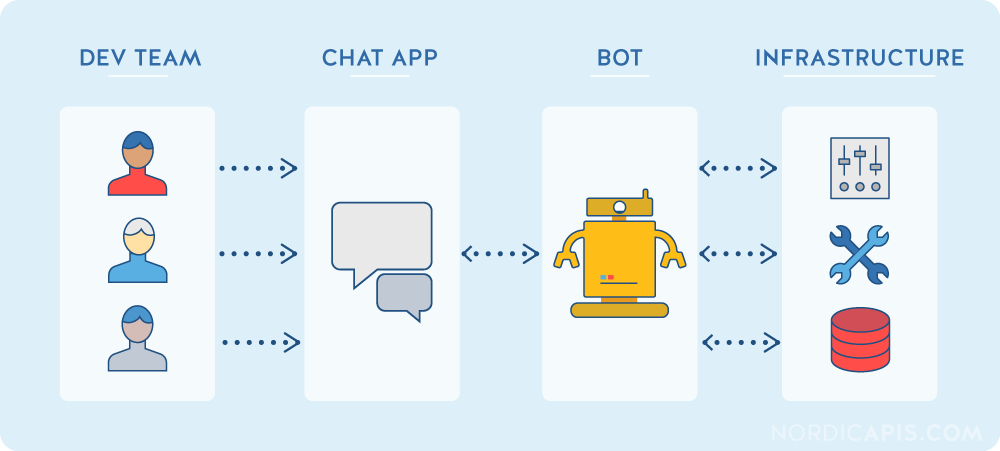
ChatOps is an approach that combines the power of communication platforms with the functionality of operational tools, letting development teams run common tasks like releasing, building, and deploying software directly from chat. First introduced by GitHub, it has become an integral part of DevOps culture because it makes work more collaborative and more visible.
Below, we explain what ChatOps is, how it works, the benefits it brings, and a practical way to implement it in your own team.
What is ChatOps?
ChatOps is the practice of driving your operational tools from a conversation in the chat platform your team already uses, such as Slack or Discord. Instead of jumping between dashboards and terminals, developers issue commands to a chatbot in a channel, and the results appear right there for everyone to see.
The term was coined at GitHub, and the idea sits naturally inside DevOps culture: it puts the tools, the actions, and the people who need them in one shared, transparent place. Because every command and its output happen in the open, the whole team gains context that would otherwise be locked away in individual tools.
How does ChatOps work?
At the core of ChatOps is a chatbot that sits between team members and their operational tools. The bot interprets what a person types, processes the request, carries out the action, and posts the response back into the channel, bridging the gap between developers and the tools the operations team runs.
Its value grows as you connect it to more systems. Integrated with alerting and error-tracking tools, for example, the bot can surface real-time server status and incidents directly in chat, so the team can spot and address problems the moment they appear rather than discovering them later in a separate dashboard.
What are the benefits of ChatOps?
The clearest benefit is collaboration. By bringing operational work into the communication platform the team already lives in, ChatOps gives everyone easy access to the same information and resources, which makes problem-solving and decision-making faster and more collective. That shared space also creates greater visibility: when the bot reports server status and alerts into a channel, developers can monitor systems proactively instead of waiting to be told something is wrong.
Those two things lead directly to faster issue resolution, because error logs and alerts are available right where the conversation is happening, so response times drop. ChatOps also streamlines workflows by consolidating common tasks into a single platform, which means fewer context switches between tools and fewer chances to make a mistake. Perhaps most importantly, it gives developers proxy-access to operational tools for releasing, building, and deploying, so the development team can handle those tasks independently and keep moving without waiting on someone else.
How to implement ChatOps
Rolling out ChatOps is mostly a matter of connecting a bot to the tools and people you already have. Start with the communication platform your team is already using, such as Slack or Discord, making sure it supports bot creation. Then develop a chatbot, either custom-built or based on an existing framework, that can understand requests from the team, respond appropriately, and perform the tasks they ask for.
Next, integrate that bot with the tools your team relies on for development and operations: version control, deployment pipelines, monitoring, and error tracking. Before you open it up, establish role-based access controls so team members can only run the actions their permissions allow, which keeps the system secure and prevents unauthorized changes. Finally, train and educate the team so everyone understands what the bot can do and how to use it and the integrated tools effectively.
ChatOps tools and platforms
ChatOps is built from tools you probably already run. The conversation happens in a chat platform such as Slack, Discord, or Microsoft Teams, and a chatbot, built with a bot framework or a purpose-made ChatOps tool, connects that platform to everything else.
From there, the bot integrates with the rest of your stack: version control and CI/CD systems like GitLab or GitHub for releasing, building, and deploying; monitoring tools like Prometheus and Grafana for status and metrics; and error and performance alerting from tools like Sentry. A curated list of frameworks and integrations is maintained in the community "awesome-chatops" repository on GitHub.
Is ChatOps the same as DevOps?
No. DevOps is the broader culture and set of practices for uniting software development and operations, while ChatOps is one practice within it. ChatOps puts the collaboration, automation, and visibility that DevOps aims for into the place teams already talk, which is why it fits so naturally alongside CI/CD, infrastructure as code, and observability.
How 8grams uses ChatOps
At 8grams, we strongly advocate ChatOps in our clients' organizations. By empowering development teams to release, build, deploy, check application status, and receive error alerts directly from Discord, we have seen a marked increase in productivity and a faster development process.
The bigger shift is one of autonomy. ChatOps lets development teams become more self-sufficient and reduces the need for constant intervention from the operations team, which streamlines workflows and builds a genuine sense of ownership. The result is a more agile, responsive engineering environment where the people closest to the work can act on it directly.
Key takeaways
- ChatOps runs operational tasks (release, build, deploy, monitor) from a chatbot inside the team's chat platform.
- It works by connecting a bot to your version control, CI/CD, monitoring, and alerting tools, with actions and results visible to everyone.
- The benefits are stronger collaboration, real-time visibility, faster issue resolution, and more autonomous development teams.
- ChatOps is a practice within DevOps culture, not a replacement for it, and was first introduced by GitHub.
Common questions.
What is ChatOps?
ChatOps is the practice of running operational tasks, such as building, deploying, and monitoring software, from a chatbot inside the communication platform a team already uses, like Slack or Discord. It brings tools, actions, and people into one shared, transparent space.
Who invented ChatOps?
The term ChatOps was coined at GitHub, which popularized the practice of driving operations through a chatbot in a team chat channel. It has since become a common part of DevOps culture.
How does ChatOps work?
A chatbot sits between team members and their operational tools. It interprets a request typed in chat, performs the action against the connected tools, and posts the result back into the channel, so the whole team can see what happened.
What are the main benefits of ChatOps?
The main benefits are stronger collaboration, real-time visibility into systems, faster issue resolution because logs and alerts appear in chat, streamlined workflows with fewer tool switches, and giving developers self-service access to operational tasks.
Is ChatOps the same as DevOps?
No. DevOps is the broader culture of uniting development and operations, while ChatOps is one practice within it. ChatOps delivers the collaboration and visibility DevOps aims for by moving operational work into the team's chat platform.
What tools are used for ChatOps?
ChatOps combines a chat platform (Slack, Discord, or Microsoft Teams), a chatbot or bot framework, and integrations with your existing tools: version control and CI/CD (GitLab, GitHub), monitoring (Prometheus, Grafana), and error alerting (Sentry).
Which chat platforms support ChatOps?
Any platform that supports bots can be used for ChatOps. The most common are Slack, Discord, and Microsoft Teams, because they offer mature bot APIs and integrations with development and operations tooling.
Is ChatOps secure?
It can be, provided you add role-based access controls so team members can only run actions their permissions allow. Because every command and its output are logged in the channel, ChatOps also creates a clear audit trail of who did what.
What is a ChatOps bot?
A ChatOps bot is a chatbot connected to your operational tools. It understands commands typed in a chat channel, carries out the requested task, such as a deployment or a status check, and reports the result back into the conversation.
How do you get started with ChatOps?
Start with the chat platform your team already uses, add a chatbot that can understand and perform requests, integrate it with your version control, deployment, and monitoring tools, set role-based access controls, and train the team on how to use it.
Related concepts.
Working on something like this?
Tell us about your project and we'll get back to you within one business day.
Talk to 8grams