
By Glend MaatitaUpdated
What is Automation Testing?
Automation testing uses software to run tests automatically instead of by hand, giving teams fast, reliable feedback on every change. This guide explains what automation testing is, the main types of software tests, the testing pyramid, and why automated testing is essential to Agile and CI/CD.
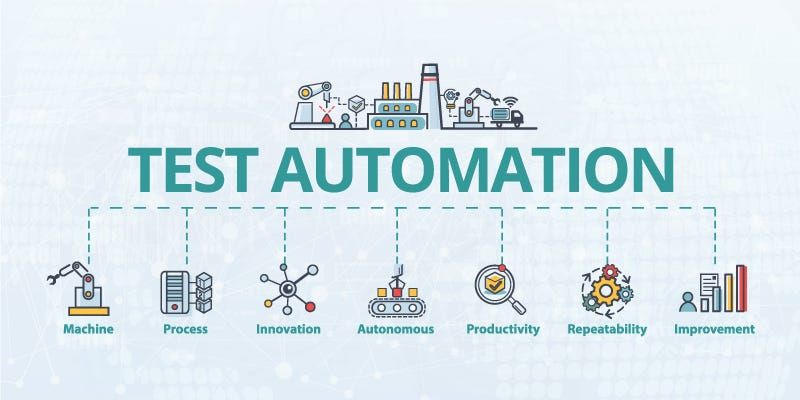
As teams move faster and release more often, testing every change by hand simply does not scale. Automation testing answers that by running tests with software, so each change is verified quickly and consistently, which is a cornerstone of Agile delivery and CI/CD.
Below, we explain what automation testing is, the main types of software tests and what each one checks, how the testing pyramid guides where to invest, and why automated testing matters so much in a fast-moving pipeline.
What is automation testing?
Automation testing is the practice of using software and tools to run tests automatically, rather than a person executing them by hand each time. Automated tests can run on every commit, in a CI/CD pipeline, giving developers immediate feedback on whether a change works and whether it broke anything else.
The goal is not to replace human judgement but to remove the slow, repetitive work of re-checking known behaviour, so the team can release frequently without sacrificing confidence in the software.
The main types of software tests
Software testing works at several levels, each with a different scope. Unit testing targets the smallest components of the software, individual functions or procedures, and is usually written by developers, for example a test for a function that sums an array of numbers. Integration testing checks how different units work together, such as the interaction between a database layer and a business-logic layer, and is typically handled by a developer or tester.
System testing then evaluates the software as a whole against its specified requirements, often run by a dedicated tester or QA team under normal, load, and stress conditions. Finally, acceptance testing verifies the system against user requirements to confirm it meets real needs, and is carried out by clients, end-users, or stakeholders, for example testing the full checkout flow of an e-commerce site.
The testing pyramid
The testing pyramid is a simple guide for how to balance these test types. At the base sit many fast, cheap unit tests, because they pinpoint problems precisely and run in milliseconds. In the middle are fewer integration tests that check how components fit together, and at the top are a small number of end-to-end or acceptance tests that exercise the whole system.
The shape matters: relying on a few slow, broad tests makes failures hard to diagnose and pipelines slow, while a broad base of unit tests catches most issues early and cheaply. Following the pyramid keeps your test suite both fast and trustworthy.
Why automation testing matters for Agile and CI/CD
Agile and CI/CD depend on shipping small changes frequently, and that is only safe when each change is verified automatically. Automated tests give fast feedback on the health of the codebase, catch regressions before they reach production, and keep the main branch in a releasable state, which is exactly what continuous integration requires.
They also make change less scary. A solid automated suite acts as a safety net that lets developers refactor and add features with confidence, knowing that any broken behaviour will be flagged immediately. That is what allows a team to move quickly without accumulating risk.
How 8grams approaches automation testing
At 8grams, we build automated testing into our clients' pipelines, from unit tests on every commit to integration and end-to-end checks before release. Combined with CI/CD and trunk-based development, it keeps the codebase releasable and lets teams ship quickly with confidence.
Key takeaways
- Automation testing uses software to run tests automatically, giving fast, consistent feedback on every change.
- The main test types are unit, integration, system, and acceptance, each with a different scope and audience.
- The testing pyramid recommends many fast unit tests, fewer integration tests, and a small number of end-to-end tests.
- Automated testing is essential to Agile and CI/CD because it catches regressions early and keeps the codebase releasable.
References & further reading
Common questions.
What is automation testing?
Automation testing is the use of software and tools to run tests automatically instead of executing them by hand. Automated tests can run on every commit in a CI/CD pipeline, giving developers immediate feedback on their changes.
What are the main types of software testing?
The main levels are unit testing (individual functions), integration testing (how units work together), system testing (the whole system against requirements), and acceptance testing (the system against user needs).
What is unit testing?
Unit testing targets the smallest testable parts of an application, typically individual functions or methods, to verify each behaves as expected. It is usually written by developers and forms the base of a good test suite.
What is the difference between unit and integration testing?
Unit testing checks a single component in isolation, such as one function, while integration testing checks how multiple components work together, such as the interaction between a database layer and business logic.
What is acceptance testing?
Acceptance testing verifies the whole system against user requirements to confirm it meets real needs. It is often performed by clients, end-users, or stakeholders, for example testing the full flow of an e-commerce website.
What is the testing pyramid?
The testing pyramid is a guideline for balancing tests: many fast unit tests at the base, fewer integration tests in the middle, and a small number of end-to-end or acceptance tests at the top, which keeps the suite fast and reliable.
Why is automation testing important for Agile?
Agile relies on delivering small changes frequently, which is only safe when each change is verified automatically. Automated tests give fast feedback, catch regressions early, and keep the codebase releasable.
How does automation testing support CI/CD?
In CI/CD, code is integrated and deployed frequently. Automated tests run on every change to confirm nothing is broken, keeping the main branch releasable and letting the pipeline deploy with confidence.
Does automation testing replace manual testing?
No. Automation handles the repetitive re-checking of known behaviour, freeing testers to focus on exploratory testing, usability, and edge cases that benefit from human judgement. The two complement each other.
What are the benefits of automated testing?
Automated testing provides fast, consistent feedback, catches regressions early, keeps the codebase releasable, and acts as a safety net that lets developers refactor and add features confidently, which enables frequent, low-risk releases.
Related concepts.
Working on something like this?
Tell us about your project and we'll get back to you within one business day.
Talk to 8grams