
By Glend MaatitaUpdated
Why design a Vendor-Agnostic Cloud?
Designing your cloud architecture to be vendor-agnostic means avoiding hard dependencies on any single provider, so you keep the freedom to choose the best fit and move between clouds. This guide explains why vendor-agnostic design matters and the best practices for achieving it.
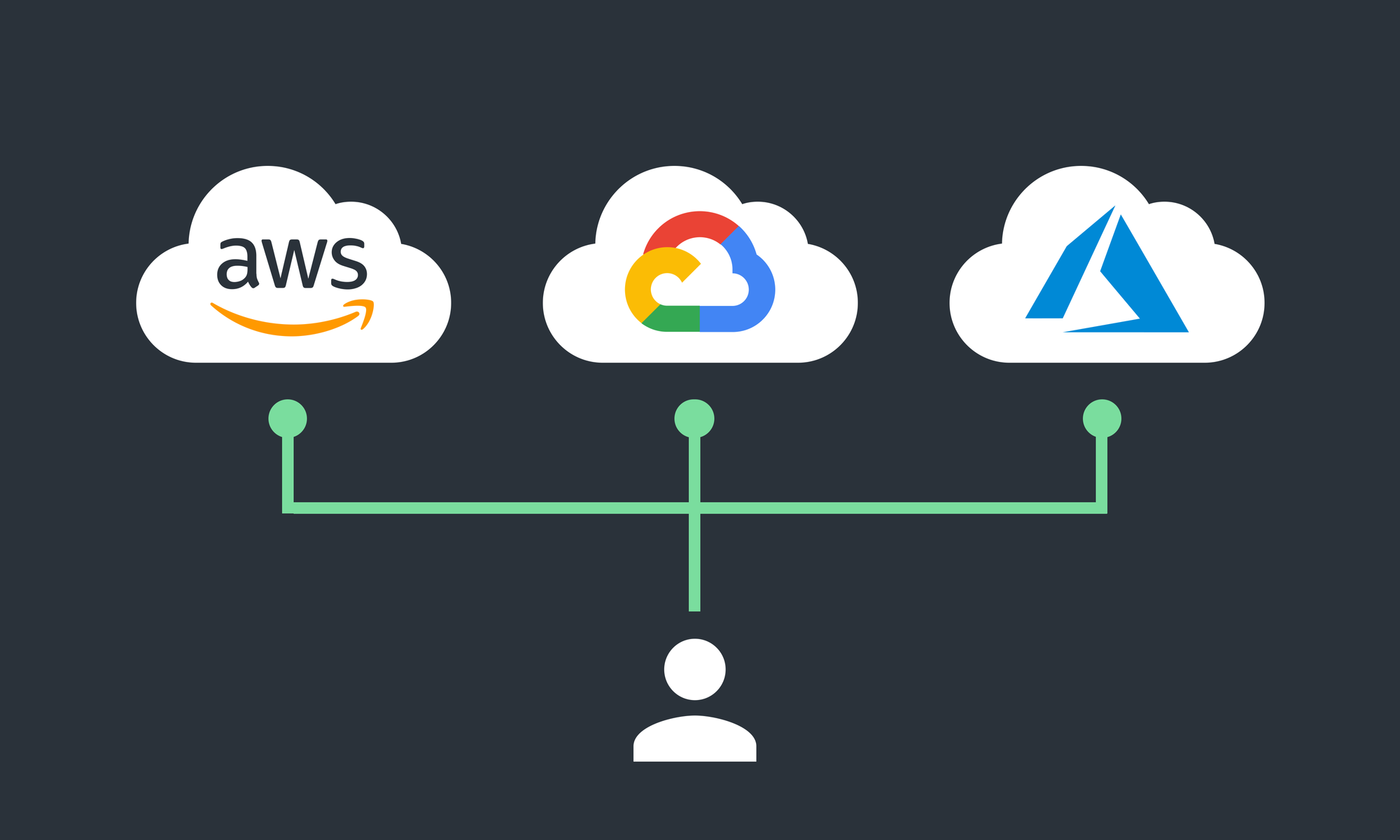
It is tempting to build directly on a single cloud provider's proprietary services, but that convenience comes at a cost: the deeper you go, the harder it becomes to leave. Designing your architecture to be vendor-agnostic keeps you in control of that choice.
Below, we explain what vendor-agnostic cloud design is, why it matters, and the practical steps for building portable, provider-independent architecture.
What is vendor-agnostic cloud architecture?
A vendor-agnostic cloud architecture is one designed to run across different cloud providers, or your own hardware, without being tightly coupled to any single vendor's proprietary services. The goal is not to avoid managed services entirely, but to keep your core systems portable enough that switching providers is a decision you can make, not one made for you.
In practice, that means favouring open standards and portable components, and isolating the places where you do depend on a specific vendor so they are easy to replace.
Why vendor-agnostic design matters
The biggest payoff is freedom and reduced risk. Vendor-agnostic design simplifies future migrations, lets you choose the best-fit service for each need rather than settling for one provider's version, and strengthens data ownership because your data and workloads are not trapped in a proprietary format. It also reduces the very real risk of vendor lock-in, where rising prices or a poor fit become expensive to escape.
Beyond risk, it encourages interoperability and collaboration between systems, supports long-term cost efficiency by keeping providers competing for your business, and fosters innovation because your team can adopt the best new tools instead of only what one vendor offers.
Best practices for vendor-agnostic design
Achieving portability is mostly about disciplined choices. Adopt open standards and lean on open-source tools and technologies that run anywhere, such as Kubernetes, PostgreSQL, or Terraform, rather than a single cloud's equivalents. Where you do use a provider's API, abstract it behind your own interface so it can be swapped later, and design for data portability so your data can move without a painful conversion.
It also helps to choose interoperable managed services that follow common standards, and to minimize over-customization to any one platform's unique features. A little restraint up front keeps your architecture flexible for years.
How 8grams designs vendor-agnostic architecture
At 8grams, vendor-agnosticism is one of our core principles. We build on open standards and open-source foundations like Kubernetes and Terraform, abstract provider-specific pieces, and design for portability, so our clients can run on AWS, Google Cloud, or their own servers, and move between them, without being locked in.
Key takeaways
- Vendor-agnostic cloud architecture avoids hard dependencies on any single provider, keeping your systems portable.
- It matters because it simplifies migrations, prevents lock-in, strengthens data ownership, and keeps providers competing on price.
- Best practices include open standards, open-source tools, abstracting vendor APIs, and designing for data portability.
- The aim is not to avoid managed services entirely, but to keep switching providers a choice you control.
Common questions.
What is a vendor-agnostic cloud architecture?
It is an architecture designed to run across different cloud providers or your own hardware without being tightly coupled to any single vendor's proprietary services, keeping your systems portable and your options open.
Why should you design for vendor-agnosticism?
Because it keeps you free to choose the best service for each need, simplifies future migrations, strengthens data ownership, and protects you from vendor lock-in, where rising prices or a poor fit become expensive to escape.
What is vendor lock-in?
Vendor lock-in is when your systems depend so heavily on one provider's proprietary services that moving away becomes costly and difficult. Vendor-agnostic design reduces this risk by keeping core systems portable.
Does vendor-agnostic mean avoiding managed services?
No. It means keeping your core systems portable and isolating the places you do depend on a specific vendor, so managed services are used deliberately and can be replaced, rather than avoided entirely.
What are the best practices for vendor-agnostic design?
Adopt open standards, favour open-source and portable tools like Kubernetes and Terraform, abstract vendor-specific APIs behind your own interfaces, design for data portability, and minimize over-customization to any one platform.
How does vendor-agnostic design reduce costs?
By keeping your workloads portable, it lets providers compete for your business and lets you move to a cheaper or better-fit option when it makes sense, rather than being stuck paying whatever one provider charges.
Does being vendor-agnostic mean multi-cloud?
Not necessarily. You can run on a single cloud while keeping your architecture portable. Vendor-agnostic design makes multi-cloud possible but is really about the freedom to choose and switch, not running everywhere at once.
How do open-source tools support vendor-agnosticism?
Open-source tools like Kubernetes, PostgreSQL, and Terraform run consistently across clouds and on-premises, so building on them keeps your architecture portable and avoids depending on a single provider's proprietary equivalents.
What is data portability and why does it matter?
Data portability means designing so your data can move between environments without a painful conversion. It matters because data trapped in a proprietary format is one of the hardest things to migrate when you want to switch providers.
Is vendor-agnostic design worth the extra effort?
For most organizations, yes. A little restraint up front, favouring open standards and abstraction, keeps your architecture flexible for years and avoids the far larger cost of being locked into a provider that no longer fits.
Related concepts.
Working on something like this?
Tell us about your project and we'll get back to you within one business day.
Talk to 8grams